
What is the Accounting Equation? Basic & Expanded Formula Explained

Consequently, your equity rises to \$50,000, reflecting the increased ownership stake in the property. This adjustment illustrates how paying down liabilities enhances your equity in the asset. Under the double-entry accounting system, each recorded financial transaction results in adjustments to a minimum of two different accounts. In all financial statements, the balance sheet should always remain in balance. It too provides a source of funding but is different from a liability because no repayment obligation exists.

Components of the Expanded Accounting Equation
Our examples assume that the accrual basis of accounting is being used. The global adherence to the double-entry accounting system makes the account-keeping and -tallying processes more standardized and foolproof. Accounts receivable lists the amounts of money owed to the company by its customers for the sale of its products. They are things that add value to the business and will bring it benefits in some form. Well, in order to answer that question we need to look at what each of the terms in the equation mean. Vimeo is a cash flow video hosting platform for high-quality content, ideal for creators and businesses to showcase their work.
Neglect of Time Value of Money
For instance, managing account receivables efficiently can enhance cash flow and operational efficiency. Owner’s capital represents initial startup money plus any ongoing investments in the company made by owners or shareholders. It’s the equity contribution used to fund operations, fundamental accounting equation acquire assets or expand the business.
- It is decreased by withdrawals by owners (dividends in corporations) and expenses.
- The users of the accounting equation, such as business owners, accountants, and investors, rely on this framework to make informed financial decisions.
- Single-entry accounting only shows expenses and sales but doesn’t establish how those transactions work together to determine profitability.
- Even though one asset decreased and another increased, the total value of assets remains the same, and the books are still balanced.
- In summary, the basic accounting equation is a fundamental concept in accounting.
- That will be followed by looking at similar transactions at a corporation.
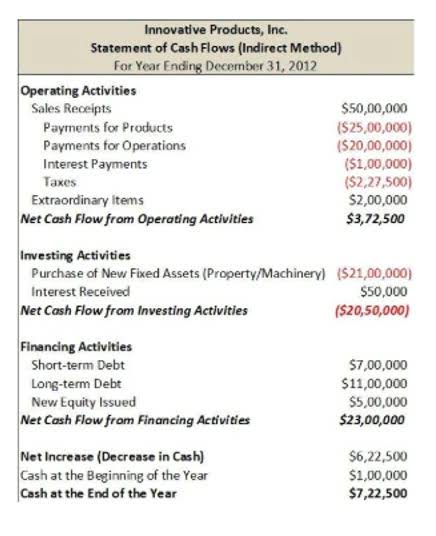
THE STATEMENT OF CASH FLOWS: ECONOMIC CONSEQUENCES
Shaun Conrad is a Certified Public Accountant and CPA exam expert with a passion for teaching. After almost a decade of experience in public accounting, he created MyAccountingCourse.com to help people learn accounting & finance, pass the CPA exam, and start their career. Our popular accounting course is designed for those with no accounting background or those seeking a refresher. For the past 52 years, Harold Averkamp (CPA, MBA) hasworked as an accounting supervisor, manager, consultant, university instructor, and innovator in teaching accounting online.
- The owner’s interest is the value of total assets left after all liabilities to creditors and lenders are settled.
- The accounting equation will always balance because the dual aspect of accounting for income and expenses will result in equal increases or decreases to assets or liabilities.
- Profit is the net income generated during a specific period and contributes to owner’s equity through retained earnings.
- The amount that is left over is what is known as the owner’s equity in the assets.
- You can also conclude that the company has assets or resources of $9,900 and the only claim against those resources is the owner’s claim.
- Accumulated Other Comprehensive Income (Loss), AOCIL, is a component of shareholders’ equity besides contributed capital and retained earnings.
You can catch errors faster, explain financials clearly, and keep things running smoothly. An accounting equation is a mathematical formula that illustrates how a company’s total assets and total liabilities relate https://www.bookstime.com/ to one another. In other words, an accounting equation is a mathematical expression.

- The accounting equation is used throughout the accounting cycle to ensure that the financial statements accurately reflect the financial position of the company.
- Remember, the accounting equation measures economic resources, economic obligations, and economic interests, which are the building blocks of all business transactions.
- The assets have been decreased by $696 but liabilities have decreased by $969 which must have caused the accounting equation to go out of balance.
- The nominal (or par) value is $1.00, and the accounting rules require the par amount to be reported separately from the additional above par.
- It helps in determining the resources the company owns (current assets), the obligations it owes to others (liabilities), and the amount of money that belongs to the owners (equity).
- Under the accrual basis of accounting, the Service Revenues account reports the fees earned by a company during the time period indicated in the heading of the income statement.
It plays out every time your client moves money, makes a sale, or takes on debt. The double-entry system ensures that every transaction affects at least two accounts, so the books always stay balanced. It’s not treated as an expense because it’s not a cost of running the business, it’s a reduction in ownership interest. Now, the business owner contributes $5,000 in cash to get things started.
Even small companies must maintain accurate records to assess financial health and ensure smooth operations. For example, when a local business sells goods for cash, both cash (an asset) and equity increase. Since the accounting equation will always stay balanced, no transaction can disrupt its accuracy—every change in assets must be offset by a corresponding change in liabilities or equity.
CHAPTER 14: The Statement of Cash Flows

From your point of view as the accountant, this transaction shows the movement within the asset section. Due to the purchase of goods, the asset (cash) decreases by $12,000, and the owner’s equity (expenses) decreases by $12,000. We will examine the operations of “ABC Enterprise” to show how to analyze transactions in terms of the accounting equation. Typically, an increase in revenues will result in an increase in the value of an owner’s equity. They might be known by a number of different names and come from a variety of different places, depending on the kind of business they are in. The assets that an owner contributes to a business are known as investments.
When she’s not writing, Barbara likes to research public companies and play Pickleball, Texas Hold ‘em poker, bridge, and Mah Jongg. This arrangement can be ideal for sole proprietorships (usually unincorporated businesses owned by one person) in which there is no legal distinction between the owner and the business. For example, John Smith may own a landscaping company called John Smith’s Landscaping, where he performs most — if not all — the jobs. Finally, the company paid salaries which were in cash amounting to $3,000.
How Does the Double Entry Accounting System Work?
As you can see, assets equal the sum of liabilities and owner’s equity. This makes sense when you think about it because liabilities and equity are essentially just sources of funding for companies to purchase assets. The accounting equation stems from the double-entry bookkeeping system, a principle that mandates every financial transaction impact at least two accounts to maintain a balanced equation.